"We got somethin', we both know it, we don't talk too much about it"
Tom Petty, Refugee
Talkin' about Refugees:
Public opinion, Social Distance,
Personal Responsibility, and Risk
- Tim Kubal, Feb 10, 2017
Refugees flee their own country's violence and seek safe haven in other countries. There is a long humanitarian ethic in the United States and elsewhere that suggests we should support refugees. However, there are many social forces that impede this generous ethic.

Within his first 2 weeks in office, Trump instituted a 90 day hold on immigration from six countries and an outright ban on all refugees from Syria. This was done supposedly in the name of national security, not based on religion, but the list includes only Muslim-majority nations and includes exceptions for Christians from these countries. U.S. Attorney General Yates refused to support the order, calling it “illegal,” which prompted a swift "you're fired" from Trump. As of Thursday Feb 9th, the Muslim Ban, as it has been called, has been temporarily stopped by two different levels of judicial review. While some have said this case would go to the U.S. Supreme Court, it is more likely that Trump will rewrite the document in a way that follows the constitution. This appears likely given that the case would probably lose at the Supreme Court, and Trump does not want to look bad again after bungling the release of the original decree that was struck down by several courts, including appeals, and he may also be wishing to recover from calling the judges that ruled on the case "so called" judges and comparing them to schoolchildren. Even his own Supreme Court nominee was bothered by Trump's disrespect for the law that was expressed in Trump's tweets.
The U.S. has a very strict refugee settlement system, and typically in the last few years has admitted only about 80,000 people per year, which is about .02% of the U.S. population. Crimes from refugees are almost non-existent and there is no evidence of any recent U.S. refugees becoming terrorists. In Europe it is a slightly different story, where terrorists did infiltrate refugee flows in France and Germany. These refugee flows have grown immensely in the past few years.
This essay discusses the refugee issue by highlighting changes in public opinion, social distance scales, as well as arguments about personal responsibility and risk.
Public Opinion and Social Distance
Recent polls from Gallup and others, taken before Trump's hastily released and highly-protested travel ban, found that over half of Americans don’t want to accept any Syrian refugees at all; almost half said they would exclude Christian refugees from Syria too. Dozens of governors promised to oppose Syrian refugees in their state. Other polls found slightly more support, such as the Brookings poll that showed 59% of Americans support Syrian refugee settlement. Experts agree that there are obvious blowback issues, in terms of motivating our enemies and angering potential allies.

But the possible blowback doesn't seem to have a dramatic influence on public opinion. Humans have a natural tendency to distrust those defined as outsiders, and this fear has emerged repeatedly throughout U.S. history. Critical stances toward refugees has always been an American norm, beginning most popularly with the Know-Nothings of the 1800's,
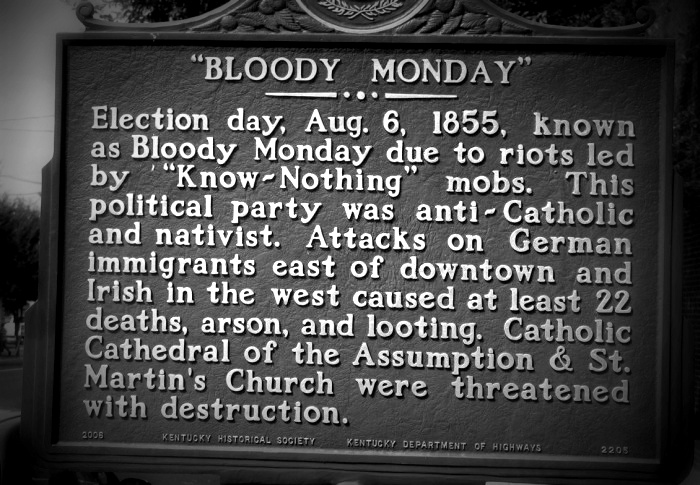
The groups defined as outsiders, of course, have changed considerably over the years. The roper center for public opinion research is an excellent source for access to historical trends in public opinion, and Gallup provides additional detail, as described below.
Before and during WWII, support for European refugees was limited. A 1938 Roper poll found that 67% opposed “German, Austrian and other political refugees” coming to the U.S., versus 18% who would allow them to come and 5% who would encourage them to come. In 1939, Gallup found similar opposition when it asked about “10,000 refugee children from Germany” coming to the United States." In a 1948 Gallup poll 57% disapproved of any plans to resettle displaced Europeans. Nonetheless, in 1948 Congress passed the Displaced Persons Act, which led to resettlement of 415,000 European refugees (mostly from Eastern Europe and Soviet Union) - far above normal immigration quotas.
After the Hungarian uprising of 1956, the Soviet Union responded with a fury and created a new refugee crisis. In 1958, Gallup found that more than half (55%) disapproved of resettling Hungarian refugees, with only 33% approved of it. About 30,000 Hungarians were admitted under the Hungarian Refugee Act of 1958.
The Vietnam war created another refugee crisis. After South Vietnam fell in 1975, the U.S. government gave refugee status to about 130,000 people fleeing from Vietnam, Cambodia and Laos. In a 1975 Harris poll, 37% were in favor, 49% opposed, and 14% weren’t sure. In 1979 President Carter doubled the number of these refugees the U.S. had previously agreed to accept, to 14,000 a month. Public opinion was not supportive. A New York Times poll showed that 62% disapproved of Carter’s action, but this did not stop the half million refugees that came from Vietnam, Cambodia and Laos that were admitted into the U.S throughout the 1980's.
In 1980, the U.S. accepted over 100,000 Cuban refugees, many of whom were recently released from Cuban jails. This came to be known as the "Mariel Boatlift," and it was unpopular in public opinion -- A 1980 poll showed that 71% opposed Cuban refugee settlement in the U.S. In 1994, over 100,000 refugees fled Cuba and Haiti; only 15% approved of Cuban resettlement, and 19% approved of Haitian resettlement, and the government responded equally harshly by intercepting the refugees at sea, interning them at Guantanamo Bay, and sending about half of them back home.
In 1999, a refugee crisis rose after prolonged fighting between Yugoslovia and the Kosovo Liberation Army. The U.S. accepted almost 20,000 Kosovar refugees, but public opinion was split (and still negative) - only 40% said accepting the refugees was the right thing for the U.S. to do.
The U.S. is a country of immigrants, and known for our welcoming attitude toward immigrants, as evidenced by our diverse population and icons such as the Statue of Liberty.

Public opinion, however, has been much more hesitant to support opening our borders to refugees. Its not surprising to see this level of ambivalence and fear, given our natural human tendency to distrust outsiders, and the long-standing distrust of Muslims and people from the Middle East, who repeatedly show up as the groups with the worst scores on the social distance scale.
The Bogardus social distance scale measures people's willingness to participate in varying degrees of social contacts with members of diverse racial and ethnic groups. It was originally developed in the 1950's and has been administered many times since. The willingness to support Europeans over non-Europeans has remained relatively stable even in the modern era,

Recent research on the social distance scale shows that the average distance between groups has decreased, and the average distance between the most and least trusted groups has also decreased over the decades.
This pattern of increasing acceptance has recently reappeared after the release of the travel ban. Despite the history of anti-refugee and anti-Arab bias, it appears that Trump's "Muslim ban" as critics have successfully labeled it, may have gone too far for most people. There may be a bit of a backlash brewing over Trump's aggressive move, as new polls show that a majority of Americans support opening our borders to the refugees. Conservative pundit Charles Krauthammer acknowledged that "overshooting on the travel ban is flipping public opinion on refugees." Actually, it is not that simple. It is clearer that there remains significant Islamophobia mixed with quite a bit of ambivalence.

The poll being referenced is a CNN poll released about 1 week after the announcement of Trump's ban. In it, 53 percent of the population opposes the Trump travel ban, including 88 percent of Democrats. Nothing surprising there. In contrast, only 12 percent of Republicans oppose the ban, and over half of Republicans want something even more expansive. Surprise -- another partisan divide. The divide even persists when the details about the rationales for the ban are specified. Does the ban reflect American values? Half of Americans and 81 percent of Democrats says no, while 43 percent of Americans (and 81 percent of Democrats) say banning refugees protects American values by keeping out people who don't support those values. Similarly, when asked if the travel ban makes the country safer, there is a clear divide -- 41 percent of Americans (and 83 percent of Republicans) say the travel ban makes the U.S. safer, and 46 percent of Americans (and 75 percent of Democrats, along with many expert analyses) believe it will make the country less safe, presumably because of the potential to alienate important allies, and motivate terrorists.
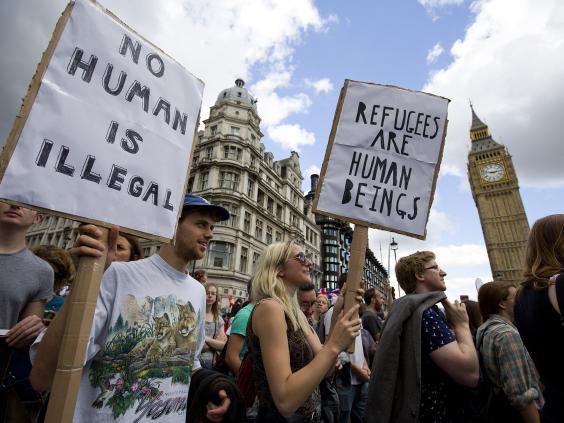
While there does seem to be a trend toward increasing tolerance toward (Arab or Muslim) refugees, there remains a great deal of ambivalence in public opinion. Perhaps part of this is the confusing argument equating opening our national borders to opening our individual homes.
Personal Responsibility
I've heard several people suggest that those citizens supporting asylum should welcome refugees into their homes. The argument is that its basically the same thing to open our country and open our homes, and that if someone believes so much in opening our borders, then they should "back it up" with some personal commitment to the cause.
It is an interesting argument. On the surface it definitely is the Christian thing to do, so it should resonate with many people, especially liberals who seem to love Jesus' works of mercy and mission to help the less fortunate.
Comparing opening the border to opening our homes is interesting, but its kind of hard to support the argument. Lets make the same argument about a different government program besides border security. The basic principle is that if we support a government program, we should not only say we vote to put government resources behind it, but we should take personal responsibility for that program too. So if we believe in having streets, then we should not only appropriate tax dollars, but also get out there and start volunteering to help the government patch them. The same thing goes for the mail, police, and all the other important services the government provides. If you want to keep these services, you should "back it up."
While actually a nice idea, there is no way that such behavior would become widespread unless it was mandated -- that's part of the tragedy of the commons: typically we do no little to nothing to preserve the common good.

Also, how far can we push the analogy that a country's borders are like your home -- homes are individually-owned, with individual liability, have an expectation of privacy, are not politically constructed geographic boundaries, etc. Most importantly, borders and immigration are social issues not private issues.
Just because we want to let refugees into our country doesn't mean it is our responsibility to house them. It would be an awful lot to ask private families to be responsible for housing refugees. Our government has a very powerful vetting process for ensuring only the safe refugees are given asylum, and our government can be burdened with transitional housing, because of our shared resources and our shared compact to help our fellow man.
Thankfully there are many generous corporations that are following the biblical message to help the less fortunate -- by providing temporary refuge, such as Airbnb offering free temporary shelter to all refugees stranded by Trump's order, or Ikea who is building them 10,000 temporary homes.
A common argument is that we should open our doors to fewer refugees. If we are to accept this argument -- how far back do we go? Many activists from the American Indian Movement say the U.S. is occupied territory and want to remind us that the earliest European settlers described themselves as refugees.
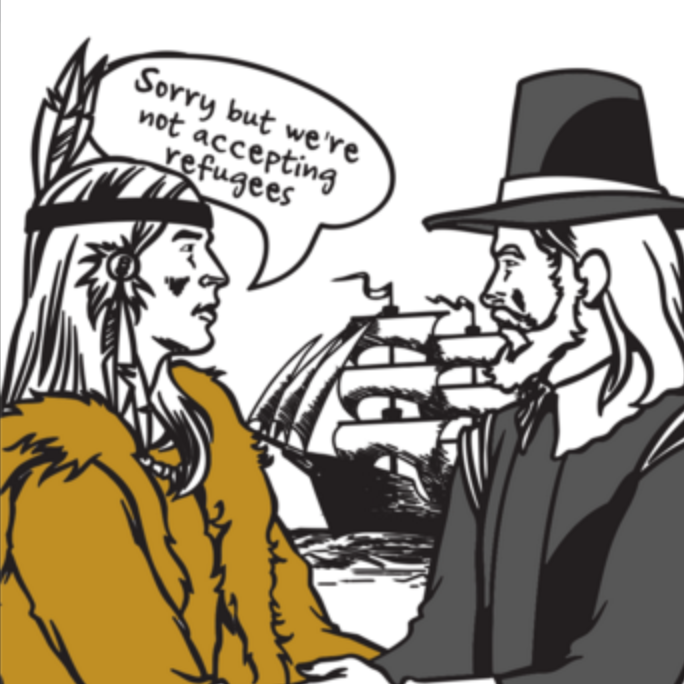
Today, many of us likely have a friend or neighbor that was a refugee from Russia. I just saw some statistics that said that Russian refugees are by far the largest refugee group in the last 20 years -- Russia is not an ally, and has had huge internal-terrorist problems for decades. Perhaps the tens of thousands of refugees from Russia should not have been let into our country?
Why not ban Saudi Arabia, where the September 11th bombers came from? Or Egypt, which has had some serious terror problems recently? There are dozens of other countries that could easily be added to the ban. The method of deciding about who to ban should be based largely on a real assessment of risk.
Getting Real about Risk
People from Somalia and Syria make up nearly half of the world's refugees. Maybe part of what we are doing through a Muslim ban is trying to find a justification for slowing down the massive influx of refugees from Somalia and Syria and using fear to justify our need for a functional limitation. This sort of wishful thinking seems necessary to retain any semblance of logic, especially in the face of what seems to be a common absurdity about the risk of actually facing a terrorist refugee.

Its not hard to look back just a few decades when we were taught to be so afraid of Japanese immigrants, and not long before that we were taught to be afraid of Italian and Irish and Jewish immigrants, all of whom, we were told, were going to bring crime and murder with them.
It is a dangerous world, and fear has helped conflate refugees and terrorists.

Trump said what has been widely described as the "Muslim ban" was driven by the need to protect Americans from terrorists coming from the countries he banned.
Is there a legitimate fear that U.S. citizens would be harmed by am immigrant or refugee terrorist?
Let's get real about risk.
The amount of U.S. civilians killed by all worldwide terrorist events each year is typically less than 30. It is dwarfed by real violent crime problems, such as firearm homicides, which are consistently killing above 10,000 U.S. citizens each year:

Terrorism within the United States is exceedingly rare. Only 318 events occurred between 1980 and 2005, according to the FBI,

The statistics suggest that less than an average of 13 terrorist incidents per year occur on U.S. soil. From 2004 to 2014, 303 Americans were killed in terrorist attacks worldwide, according to State Department reports, about 30 per year. During that same time frame, 320,523 Americans were killed because of gun violence, or about 30 thousand per year.
In the U.S., heart disease and cancer each kill about half a million people per year, and almost 50,000 people commit suicide each year. Still, it is hard to suggest the deaths from terrorism are not significant, given the fear terrorists successfully wished us to inflict on ourselves, from horrible events such as the death of 50 at the Miami nightclub last year. But its also striking that terrorism, through such a small amount of actual harm, engenders this much fear, and works so efficiently to justify unconstitutional government actions.

In the United States, the notion that we should be afraid of refugees, particularly from Muslim-majority nations, is popular, and is a core assumption supporting Trump's "Muslim ban." Yet, the FBI reported that only 6% of terrorism in the U.S. between 1980 and 2005, comes from Islamic terrorists.

So, lets recap: There are not many terrorist events each year and not many people die from terrorist events each year. And, Muslim terrorist events are a tiny proportion of the annual totals of terrorist events. The last remaining question is obvious -- there still must be a lot of terrorism from refugees, or from countries in the ban, right?
The ban would not have affected the terrorists responsible for any of the major Islamic terror attacks in recent U.S. history. In 1980, the government established the Refugee Act to screen refugees. Since 1980, how many thousands of refugees must have committed acts of terrorism? It must be a lot since the number motivated unconstitutional government action. Nope. Its not a big number. The number is zero. Even before 1980, there have only been less than five deaths from refugee terrorists.
Despite having almost no risk of succumbing to any terrorist violence, let alone Islamic-inspired terrorists, Gallup polls consistently show that between 30 and 50 percent of Americans are “very worried” or “somewhat worried” about Islamic terrorism in the U.S.
Talk about terror is rampant, and fear does benefit some groups of people. Professions such as politicians, journalists, and all the other folks in the military-industrial-media complex stand to benefit.

While not perfect, university faculty are less likely to personally benefit and are typically more trustworthy experts than politicians and their ilk. One excellent professor analyzed the data on terrorism in the U.S. from refugees.
Charles Kurzman, a sociology professor at the University of North Carolina and expert on terrorism in his 2106 report recently said that since 2001 no one has been killed in the United States in a terrorist attack by anyone who emigrated from or whose parents emigrated from Syria, Iraq, Iran, Libya, Somalia, Sudan and Yemen, the seven countries targeted in Trump's "Muslim ban".
So there is no chance that we are at risk of a terrorist attack from a refugee coming from one of these seven counties. Kurzman went on to say,
“My advice to the new administration would be to declare victory . . . your odds of being victimized by a terrorist attack are infinitesimal.”
Kurzman is not exaggerating. The chance of an American being killed in a terrorist attack caused by a refugee is 1 in 3.64 billion per year, according to the Cato Institute analysis. As a point of reference you are almost 4,000 times more likely to be hit by lightning than be a victim of a domestic terrorist attack by a refugee. The 3.64 billion number is an outcome of calculating that only 20 of the 3,252,493 refugees admitted from 1975 to the end of 2015 were terrorists, which amounted to 0.00062 percent of the total. Only three of the 20 were successful, killing a total of three people.
How could we react in fear and ignorance in response to something that brings such little physical harm? The simple answer is threefold: terrorism is a cheap and effective method of warfare, the propaganda that politicians spew to justify their agendas does not always fit the truth, and our fears don't always match real risk.
Feel free to leave your thoughtful comments below.

I completely agree that the executive order Trump signed was reactionary and unconstitutional. His campaign emphasized national security and he probably felt obligated to deliver on that keystone -- however his executive order was more or less a blunder for reasons you point out (i.e. the executive order was a travel ban that singles out certain Muslim-majority countries while excluding their Christians, it doesn't include countries like Saudi Arabia that were connected to 9/11, and it questionably leaves out other Muslim-majority countries where Trump has business ventures). I feel Trump has in many ways capitalized on these fearful feelings exhibited in public opinion regarding immigration and refugees.
ReplyDeleteIt is, in many cases, unfortunate that it is human tendency to distrust outsiders, as exhibited with how the public polled over the years regarding various refugee crises. The vast majority of refugees aren't seeking to harm people via terrorism and are instead merely seeking asylum in hopes of rebuilding their lives and escaping the conditions they previously faced.
Honestly I think the real kicker here is the "risk" sub-topic. When compared to gun-involved homicide, the risk of dying by a terrorist incident is extraordinarily low. That being said, I do think precautionary measures can be taken (and in many cases already are being taken) against terrorism in a manner that isn't unconstitutional or hyper-reactionary. I just don't think the actions that are taken to prevent terrorism should overshadow issues of much higher risk.
I do agree that Trumps executive order on the travel ban was a very unlawful thing to do based on the statistics that you mentioned. The one that I felt was a big shock to me was that the countries that he banned are where ISIS and Al Quaeda are focused on, but he doesn’t ban the countries that involve the world’s largest terrorist organizations. Trump said the “Muslim Ban” is to protect Americans from terrorist attacks. However, he avoided banning people from Muslim countries where he has major businesses. Overall I thought the essay was very informative to me because I didn’t know about much of the facts about this travel ban situation.
ReplyDeleteHello Marlene, It is interesting to learn about how only the countries that were of less financial interest were on the so called ban. I find if scary that just as there are people who are opposed to something like this, there is still a side the is in favor. I can honestly say that everything that has been going on seems like one big nightmare and i hope such discrimination can be put to an end before even more people get hurt.
DeleteBrandon Jauregui, Soc. 3 9AM
ReplyDeleteI agree that the executive order that Trump signed was unconstitutional.I really enjoyed reading this post because I learned many new statistics that I did not know about. One of the statistics that stood out to me was that, the chance of an American being killed by a refugee committing a terrorist attack is 1 in 3.64 billion per year. I had also read about the countries he banned not having history of terrorist attacks in the United States, and how the countries he allowed to keep entering the U.S. are the countries with big terrorist organizations. I did not know he had business ties with them so that was an important part of the topic I did not know.I think that your essay was overall very informative and contained many great facts and statistics.
I agree that the travel band is putting unneeded stress on the country and spreading misinformation and fear among the general population. The purpose of this article appears to be to highlight America’s history with refugees and to show the lack of dangerous implications present in today’s issue. The conclusion is that fear, prejudice and misinformation are the driving force behind the desire to keep refugees from coming into our country, as the probability shows that it is more likely to get struck by lightning then to be a victim in a refugee terrorist attack. The reasons presented in this argument are mostly statistics, although there is a few causal claims as well. For instance, the difference between homes and borders of a country are highlighted and used as a major point in the argument. The combination of statistics and causal claims leads to strong evidence and a persuasive argument on this topic.
ReplyDeleteSoc 3, 9AM
DeleteNorma Ramirez Soc 3 9am
ReplyDeleteI do agree that refugees come to this country looking for a better life. Though, back then the United States have been known for immigration. What is putting many people on alert is allowing refugees come to this country. Many people don't know what intentions the refugees have towards our country. Many Americans fear that terrorism may happen. Trump talked about the travel ban in which it had a controversy between the citizens and the two parties. The writer included many statistics that support the topic. The essay also included hasty generalization in which it talked of terrorist from Iran and how it was applied to other people from the same region. The essay included many good facts and kept us well informed about refugees.
Kylie Brooks - Soc3 9am
ReplyDeleteWhile President Trump may have genuinely thought he was doing the right thing by creating the travel ban, his actions were based on emotions and fear – not facts or evidence. The fear that people have regarding terrorists is perfectly rational. However, what is irrational is who is blamed for this fear, and how they are all grouped together. The six countries that Trump included in his article were not even countries that had histories of terrorist attacks in the United States. I found the essay to be very informational, especially in the statistics it provided. If everyone in our country knew these statistics and the truth behind them, Islamophobia might actually disappear completely. Fear should not be used as a justification for keeping human beings in need of help out of our country.
This comment has been removed by the author.
ReplyDeleteJuliana Sani- Soc3 9am
ReplyDeletePresident Trump has only been focused on the negative aspects of the refugees and has over looked the people who want to come to America to start a better life. This travel ban has caused a lot of stress and tension throughout the government and this can be seen in the news and all over social media. The chart that shows data of terrorist attacks up until 2005 gives credibility that Trumps's ban is seemingly unlawful. also, the pictures throughout the essay make it more appealing to the eye and interesting to read. The statistics given provide evidence for the argument and there is a strong argument throughout the article along with a reasonable conclusion to tie it all together in the end.
Pavy Her Soc3 9AM
ReplyDeleteThere has been issues involving refugees. Trump has stopped 7 Muslim countries from entering the U.S. Trump wants to stop refugees from entering the U.S. This will cause problems because many people will lose jobs. The benefit is that money will be saved and the population of the U.S will decrease as well. However, the U.S would not be the same anymore with less refugees which make up the U.S. The reason Trump does not want refugees is because he believes that they all are bad. There are refugees that are innocent and try to make a better life in the U.S.
I totally agree with your comment because what Mr.Trump had tried to do is an example of hasty generalization as not every Muslim person is a terrorist and it is absolutely acceptable that people from these countries may have helped United States in past to be a better place to live in .
DeleteI also agree with your comments, I think Trump is being too quick in his reasoning. He is banning multiple refugee countries from entering the U.S based on only a few observations. while some people coming in could be terrorists most of them truly need help.
DeleteI also agree that President Trump's executive order was completely unconstitutional and directly attacked those that come from an Islamic background. The United States has long been known as the land for opportunities and for its diverse populations amongst other nations. As President Trump stepped into office, this title has significantly shifted as well as the reputation of the United States regarding everything we as Americans stand for:freedom, equality, and liberty. The issue targets six countries across the world. This ban is said to prevent terrorist attacks from occurring in the future, in reality however, the probability of an American being killed by a refugee is extremely low. The author uses strong evidence by using charts, statistics, and presenting quotes of relevant authority to further support the thesis. The author makes reasonable statistical claims when addressing the chances of an American being killed by a terrorist attack caused by a refugee. If President Trump's executive order continues to stay in effect, it could further cause tensions amongst the six Muslim-majority countries where refugees are banned and the United States.
ReplyDeleteSoc. 3 9AM
DeleteJordan Lee Soc 3 9 am.
ReplyDeletePresident Trump reasoning is unlawful. He doesn't realize that refuges that come into the U.S want a better life, that means work, contributing to our country not terrorism. Yes there is terrorism happening around the country but that doesn't mean Trump should stereotype everyone that comes in from other countries and think there terrorist. Based in the chart in the blog, it shows terrorism from 2005 which isn't very trustworthy, how can Trump base terrorism happening now off of rates since 2005? His reasoning behind this act is not because of evidence and facts, its because of his own feelings and fear. He needs to realize people are coming her for a new start not for terrorism.
Anel Acosta (Soc 3 9am)
ReplyDeleteI agree with U.s General Yates who refused to support the executive order made by Donald Trump by calling it “illegal”. Although, I do think it was unfair that that Trump fired General Yates because of that. It is so unreal to see our country’s president offend judges by calling them “so called” judges and comparing them to schoolchildren, it is extremely unacceptable to have a president with childish behavior himself, who expresses his rage on a Twitter. Many in fear ask why Trump blames all these refuges for crimes and terrorism. When there is no evidence of any recent U.S refugee becoming a criminal or terrorist. Back in 1950-1899 there was an increase of refugee acceptance in the United states from all kinds of country’s including Hungarian, Cuban, European, Kosovar, and others. This country is a country of immigrants, in reality the first residents of the American West, were large populations of American Indians and Hispanics way before white easterners, immigrants, and African Americans were moving west. Like mentioned in the essay it’s mainly the public opinion that’s hesitant to support opening our borders to refugees. Many that are born here or that descend from immigrant parents or grandparents don’t understand the struggle and reasons the refuges go through in their homeland countries. I agree with a statement made under the personal responsibility section, just because we want to let refuges enter our country doesn’t mean it’s our responsibility to house them. That’s why there are special organizations specifically made for that, which is very worrying to see refuge homes collapse due due this injustice. In general, this essay was very helpful by helping me fully understand current social problems occurring in our country. Interesting topic.
This comment has been removed by the author.
ReplyDeleteManuel Alfaro
ReplyDeleteProfessor Kubel
Soc 3 9am
14 February 2017
The first article For Refugees And Advocates, Trump Immigration Order Stay Leads To Disarray, by Deborah Amos speaks about how refugees in the United States are facing many problems and possible budget cuts due to Trump's executive order According to Frelick the culture of America is going to say no to accepting refugees due to Trump persuading people that refugees are indeed terrorist even though there is no evidence that actually supports that claim. For years the refugee resettlement program has been a partnership between the State Department. The issue the author is discussing is that in the result of Trumps hold on refugees will make a negative impact on resettlement agencies due to having no flow of refugees, thus cutting funding for these agencies. The author’s conclusion is that major cuts will occur if Trump's band is not changed in one way or another.
The second article was Beyond Biglaw: A Refugee From Aleppo, And America’s Beauty, by Gaston Kroub. He states that America is in the middle of a serious legal debate on how to deal with these refugees, finding the balance of nation security concerns and America's role has a haven for those searching for freedom. He mentions Sion, who left Aleppo to come to America seeking refuge, having freedom here in America Sion’s children and grandchildren went on to become successful. The issue the author is making is that of why America should welcome refugees and his conclusion is that of a story of Sion, a refugee from the 1960’s, whose family was successful due to America's traditional role of being a haven for those who are being politically oppressed.
Both articles are in support of the United States accepting refugees and go over the negative, and positive outcome of having open doors to this country. Both speak on how there is little to almost no evidence of refugees being terrorist. Whatever the president and this country decides to do about this conflict will profoundly affect not only this country, but others.
Works Cited
Amos, Deborah. "For Refugees And Advocates, Trump Immigration Order Stay Leads To Disarray." NPR. NPR, n.d. Web. 15 Feb. 2017.
Kroub, Gaston, ATTICUS T. LYNCH, GARY J. ROSS, Lynn Luong, Source: Kinney Recruiting, Source: Above the Law, Source: Dealbreaker, Source: MICHELE C.S. LANGE, and Source: MyShingle. "Beyond Biglaw: A Refugee From Aleppo, And America’s Beauty." Above the Law. N.p., n.d. Web. 15 Feb. 2017.
While President Trump may have thought that his reasonings were in line with what this country needs, he may have acted too quickly and out of fear. His decision to ban certain refugees based on where their coming from or their ethnic background is completely unethical. He is shaming and banning certain people imply based on race. There should be some regulations to letting refugees in, but to completely cut off some parts of the world is not right.
ReplyDeleteJayden Garcia
DeleteSoc 3. 9 A.M
Jayden Garcia
ReplyDeleteSoc 3. 9 A.M.
The first article that was found talked specifically about Fresno county and how there has been an increase in refugees coming to the Fresno area. Many of the Islamic churches in Fresno county have reportedly reached out to known refugees in attempt to help them. Many people came the Fresno area because of the diverse ethnic groups here. One church in specific, the Islamic Cultural Center, has been reaching out to refugees, offering help and security. The Islamic church released a statement discussing the condition of the refugees, saying that most of their homes have been destroyed and their towns being completely consumed by war. Fresno could see an increase in refugees as California still holds off on Trump’s ban.
The second article found focused on Trump’s new ban of Syrian refugees and how that is affecting the refugees seeking help. Trump believes that continuing to let more refugees in will only be a security risk and will not have a positive effect on America’s future. He is generalizing that all Syrian’s warrant war and that all they want to do is to come to America to spread violence. Although Trump’s ban is officially in place there are still many states holding out from the ban. According to Trump’s ban new refugees will stop being permitted sometime in early March.
Dominique Montanez SOC 3 MW 9am
ReplyDeleteI too agree that the executive order issued by Trump is unconstitutional and is directly targeting specific ethnic groups. The ban is targeting six countries in the Middle East with Islamic backgrounds. Trump reasons that the executive order is supposed to halt terrorist attacks from occurring in the future. However the refugees seeking to enter the United States are less likely to terrorize the US. The author supports this claim with statistical data, and reliable quotes. Moreover, the statistical data that is presented of the likelihood of a terrorist attack to occur in the US are extremely low when compared to the deaths that occur among Americans due to gun violence.
Mayra Rodriguez SOC 3 9am
ReplyDeleteI agree that the way that Donald Trump addressed the issue of refugees coming into the U.S is very unfair, especially because it is being directed at one specific group of people. It creates an assumption that those refugees are bad people are only here to cause problems, but in reality they may not be. Letting them into our home may not necessarily be a bad thing, considering they are running away from theirs for a certain reason.
I agree with what you said, Trump isn't thinking clearly with what he is doing to specific groups of people. I also agree that maybe some people are running from their country to avoid conflicts they might be having, but he is truly making hasty assumptions that is impacting the lives of everyone.
DeleteCollin Hayes - SOC3 - 9AM
ReplyDeleteWhen you write about the issue of whether refugees should be allowed into the U.S. or not, you provide some solid reasons for why they should be allowed. Your provided several graphs and charts of statistics for refugees in relation to crime which provide a positive look on refugees. These charts and graphs serve as great evidence to support your ideas. Your conclusion that terrorism is highly presented with propaganda is interesting and leaves readers with thoughts on the issue.
Kari Kimura (Soc 3, 9am)
ReplyDeletePresident Trump’s Muslim ban was hasty and irrational. I am not a person that is very interested in politics and really haven’t read much about Trump’s ban before this assignment. After reading the two articles and this blogpost, it is clear that terrorism is not our country’s biggest worry right now. The issue that the author is discussing is the controversy that Trump’s Muslim ban entails. Dr. Kubal discusses the various sides of public opinion and the differences between opening the nation’s gates vs. a person’s own home to refugees. The author used strong evidence by describing polls, statistics, and bringing in historical events to back up his argument. It is evident that the risk of terrorism is very low in comparison to gun violence and health diseases. Yes, people are fearful of terrorists, but the slim chance of an attack happening demonstrates the illogicality of Trump’s actions.
The author used great evidence to support his claims and statements. Some of the evidence that included and stated was having great statistics, quotes, and historical events. These evidence helped made the article better and have a better understanding. The evidence that were included, transition well with the claims and statement that were made. Furthermore, I agree that there are many refugees that come to the United States to have a better life, but Trump doesn't see that. He see that bad things in the refugees, and doesn't notice that not all refugees are bad as others. Most refugees comes to the United States to have a better life, job, etc. but what Trump see is terrorism. There are terrorism that is going on, but most refugees are not terrorism. Trump stereotyping refugee is not fair, and should open up more that not all refugee are terrorism or the same.
ReplyDeleteMontserrat Sandoval-Ayala
ReplyDeleteSoc 3, 9 AM
After reading this essay, I have gained more knowledge and interest into Donald Trump's Muslim Ban. The author does a great job in explaining what the topic is and provides different explanations to the issue such as: the causes of the ban and reliable sources that makes the reader oppose this ban. I know I did the moment I read the statistics from the FBI and what sociology professor, Charles Kurzman had to say about the issue. I completely agree that Trump's ban was a bad idea yet I do not think it was completely irrational. Only because many U.S. citizens, including the U.S. government, have grown more fear from both immigrants and terrorists. When in reality, there are other events and people in the world we should be more afraid of. Overall, this essay helped me understand the refugee issue better than I have when reading other articles. The U.S. is known as the "Freedom of the Land" and now, it is the complete opposite of that phrase.
Ashley Olson
ReplyDeleteSoc 3 9am
I do agree that what Trump is doing is not the right thing, but that doesn't mean that we absolutely have to discredit his presidency. He was elected for a reason and I believe with him eventually have the right people working under his administration to get this issue resolved. The author is discussing the issue of Trump's refugee ban in the United States and that what he is doing is not good at all. This author uses strong evidence towards his argument in the way that it shows his readers his thoughts and ideas in a creative manner. What I found to be very unique was the use of the political cartoons in the body of the essay to give the readers a visual of his argument. Next, the logically fallacy I felt the author used was an appeal to fear because lots of evidence was put towards "if we don't get the issue fixed, bad things will happen"; lots of fallacies were used but I believe that appeal to fear was used the most.
I agree with what you are saying. Trump is not thinking clear and is making hasty assumptions singling out certain race groups that is morally wrong.
Delete(Soc. 03 9am)
ReplyDeleteI agree that our new president is making unlawful choices that are really affecting the lives of many citizens. Yes, there might be people sneaking in the country to work and have a better life than their family previously did. Obviously he doesn't understand since everything was pretty much handed to him and he had support from his family so he has no idea what it is like growing up in poverty or being a minority. Two components which I will be using are to see what kind of ambiguous language the author is making, as well as what assumptions is the author making.
Isaac Campos Soc 3 9AM
ReplyDeleteThe issue discussed in this essay is the relationships of the United States and refugees in history. The author uses strong evidence with he use of quotes, historical events, and data.
Codie McKeighen Soc 111 M/W
ReplyDeleteAfter reading this piece I have learned about one side of the story and multiple facts about previous cases of refugees entering other countries for safety. Some like Vietnam, Cambodia, and Laos refugees fleeing to the United States because of the Vietnam War and over 100,000 Cuban, criminal, refugees in 1994. It seems as though our country has always been accepting of those in need but I do, somewhat, agree with what President Trump has chosen to do. I don’t agree with how he has approached the topic – i.e. discriminating based on religion and race and separating families. I do believe that our country needs to fix and help itself before it can help others. I think that there are many people in our country who are frightened because of past events and President is trying to reassure confidence. I appreciate all of the facts from this essay but I feel it may be skewed to a democratic view and only includes facts and statistics that support that idea. Such as the CNN poll, a news station known for being extremely liberal, that was taken a week after President Trump’s ban: 88 percent democratic and 12 percent Republican. If the same poll was done on platform that is overtly Republican, then, I feel, there would be a different results. I support President Trump’s ideas, but he is taking it to an extreme. We do need to help others and we can’t do that by separating families. Rather than protesting and causing more hate in OUR country, WE need to stand up TOGETHER, as the UNITED States of America. We can’t do that if we are constantly fighting each other. I do appreciate this essay for its back history and for a differing opinion.
Finally a critical response! I'm not sure if everyone just agreed or if they were scared to respond critically, but almost nobody had anything critical to say about the essay. I really appreciate the critical comments! Thank you! It is so important to think critically, and I also know how important it is to encourage disagreement and dissent: I cherish it and I appreciate your dissenting voice! Debates with people that don't always agree with us are what make us smart. I do have some debate with a few of your statements. I'm not sure you understood the findings of the CNN poll, but I do agree that different polling companies could have come to a different result, depending on the wording of the question, and how they conducted the survey. That's why its important to pay attention to multiple polls. I might disagree about the political leanings of CNN, as I think most evidence shows them fairly moderate compared to other major outlets, but that could just be a matter of perspective. CNN is considered very liberal compared to Fox news. So I agree with most of your comment, but I disagree with your closing statement that dissent is somehow bad for our country. If that was the case, then your dissenting view of the essay should be censored, and Fox News should have shut down during the Obama presidency. When Obama was President, Fox presented dissent as patriotic, but now that a conservative is in power, I hear conservatives on Fox and elsewhere suggest dissent is unpatriotic. No matter who is in power, dissent is good, and debate is healthy. Disagreeing is not the same as hating. The ability to speak our dissenting views is our first amendment right, a core reason that makes this country great and better than many others, and makes us a much stronger country. People that speak a dissenting voice are doing a great service to the country and to the speaker with whom they disagree. People that stifle dissent lose the opportunity to learn and grow, and countries that stifle dissent are filled with revolutions. To paraphrase JFK: A country that stifles peaceful protest and dissent makes violent protest and revolution inevitable.
ReplyDeleteI found the essay very informative and I truly appreciate all of the background statistics that were presented throughout the paper. I have never given situations like this much thought because I find it frightening that people are still judgmental towards anything "different" than what they are used to. I think that the idea you mention near the end somewhere along the lines of "fear sells" is going to continue to play a big role in politics. I agree that it is an easy way to manipulate the public opinion and a way to distract us from the actual interests. Although a few people may be willing to inform themselves, I feel like most people end up believing what they are told based an the appeal to authority. So they almost never question things when they occur unless it ties into their personal interests.
ReplyDelete- Rocio Chavez
Rocio Chavez
ReplyDeleteSociology 111
Dr. Kubal
16 February 2017
Response to Refugee Articles
After reading two articles which focused on refugees, I couldn’t help but wonder what I could do to help. Both articles discussed ways that everyday Americans were trying to come together to show compassion and provide services to those who are being given the cold shoulder by our government lately. There were a lot of good points mentioned throughout both articles.
The first article I read, “I don’t believe people need to be fearful of refugees” by Linda Girardi, talked about how many members of a church are finding ways to help refugees from all nations. The World Relief DuPage/Aurora hosted the Refugee and Immigration Advocacy Night at Wesley United Methodist Church. Here all members came together and discussed how they pledged to help those in need especially now that the Trump Administration has begun to discriminate on people from certain areas. The article had a small section about a girl who spent time overseas teaching English and how her thoughts about refugees dramatically changed after witnessing their struggles in everyday life. The article highlighted the fact that people should not hold opinions about others based on what they hear because more than likely, they are misleading.
The second article I read, “House panel votes to withdraw Florida from refugee program” by Gary Rohrer, focused more on the politics side of the story. The article discussed how Tallahassee, Florida would no longer participate in a federal program assisting refugees entering the country. It was stated that Florida agencies receive about $257 million per year from the federal government to contract with non-profit groups that provide services to refugees such as; cash, job training and medical assessments even vaccines. Another idea addressed in the article focused on the fact that of the 62,223 refugees that entered the state of Florida last year, 87 percent were from Cuba or Haiti.
These articles that you talked about are very interesting and I would like to read them myself. Especially when you commented on how much money they get from the government in which is $257 million dollars. That is amazing on how you summarized the two articles in a way that was great.
DeleteStephanie Uriarte
ReplyDeleteI enjoyed your essay Dr. Kubal. I liked how you provided various statistics that argued against the “Muslim” Ban. In your post, you talked about how Americans are divided on the issue of the “Muslim” Ban making America safe or less safe. I believe that this ban only makes America less safe. The terrorist groups will take advantage of this ban to recruit more people into their cause. It only fuels their motives and reasoning into doing these violent acts of terrorism. I also believe that it is not the same thing opening the doors of your home if you support opening the border for these refugees. By supporting an open border for refugees means supporting their right to seek asylum in this country. Letting them have the opportunity of life, liberty and the pursuit of happiness. By supporting an open border doesn’t mean the United States should allow all refugees that apply to come in. On the contrary, I agree with having a hard and solid vetting for those asking to come in to this country.
Dr. Kubal, I completely agree with your position on Trump's actions. I think that since he made promises like getting rid of immigrants before he was elected, he felt that he should immediately try and keep those promises, even if they are unrealistic. I also like that you point out that the countries that the United State should be worried won't be effected by the deportation. Trump is targeting groups (Muslims) that have not shown any ties to 9/11.
ReplyDeleteI can't say I know very much about politics. However, I know that immigrants (even if they are illegal), are crucial to the functionality of our country. They keep our economy flowing and take the jobs that most Americans don't want.
Overall, I enjoyed your essay and I think you pretty much it the nail on the head.
Dr. Kubal, I was interested in the fact that in just 2 weeks of trump having his power of presidency he was able to ban Refugees and the six different countries. But what will that really do, is he thinking that he will make the country better again. My opinion is that if immigrants are are here legally or illegally, and they are following the laws they should have the right to stay in this country. Yes of course if they have a criminal record well then of course they do deserve to go back to their country. But i believe everyone should be able to make a dream here and better there future.
ReplyDeleteI also agree with your statement where you say "everyone should be able to make a dream here and better there future". That is basically what a lot of people actually come to the U.S to do. They intend to make a better, more sustainable life for themselves, or even their families. The approach that President Trump is taking is not right at all, and will be unfair for a lot of families just trying to live a better life away from poverty or violence.
DeleteI also agree with your statement where you say "everyone should be able to make a dream here and better there future". That is basically what a lot of people actually come to the U.S to do. They intend to make a better, more sustainable life for themselves, or even their families. The approach that President Trump is taking is not right at all, and will be unfair for a lot of families just trying to live a better life away from poverty or violence.
DeleteThis article has been very insightful. It is evident that President Trump has only focused on the negative aspects of refugees rather than the fact that they are people who are in need of help. During my search on google I also read about the Airbnb trying to get people to host refugees so that they can too become a part of society. This was very interesting because it seems more often than not these people can receive help and be able to integrate into the economy and society. This essay was very insightful and it also opened my eyes that a lot of people are skeptical only because they are afraid, afraid without any real warrant...
ReplyDeleteBianca Martinez
Deletesoc
330 Mon/Wed
This comment has been removed by the author.
DeleteI really enjoyed reading your essay. It was very informative and i love how you provided ALOT of evidence in the form of statistics. It is always best to have evidence to support claims.
ReplyDeleteSergio Cortez
ReplyDeleteWhat I found very interesting about this article was how he actually fired a U.S Attorney General for not agreeing with his new order that he plans to make happen. It just really makes you think how much more he will do if other individuals do not support his ways of making this country great again. I was also fascinated by the extra information that I was able to learn on which countries he is focusing on more, but others which harbor dangerous groups are being ignored. Seeing how he also does not cut ties with countries that have his attention due to money is something else that was quite interesting to see. All these statistics that are present throughout the article give me a better insight on just how much the media, and other individuals such as President Trump make all these individuals that are coming in from foreign countries appear to be a terrorist, or threat to the the United States, and its people.
Avelina Charles
ReplyDeleteSociology 111
Dr. Kubal
17 February 2017
Dr. kubal, I would like to start off by saying that I enjoyed reading the blog you posted. To not allow refugees into the United States because they might generate crime is not a valid reason. I say this because, most of the crime generated in the United States is not by refugees. The data shows this to be true. There is a higher chance a "Full Blooded American Boy", whatever that means, walking into his school with a trench coat shooting up the place because he was never taught how to properly process his feelings. Another point I would like to touch basis on is the whole if you want to fight for the refugees then let them stay in your house argument. To speak up for those without a voice does not mean that those individuals should make that problem their own. What it means is those people are forced to leave their native land not by choice, but by force. They need help and if we can help then we should. The way of thinking that its not my problem is what keeps this country we call home as divided we stand. It will continue to stay divided under a leadership that reinforces fear, and hate through segregation. Slogans like "Make America Great Again", and "Bad Hombres" is the fuel that feeds the hate crimes and ignorant beliefs. If others thought like Trump and his posse of "Good Old Boys", then the white male would not be the majority playing monopoly with the future of this country. The one good thing he has managed to do is bring those together that normally would not come together with a common cause. To be the voice for the unheard, and do what it takes to not revert to a backwards way of thinking. Refugees have a right to be here. Just like America feels they constantly have a right to participate in wars that force refugees to flee in the first place.
Dr. Kubal,
ReplyDeleteI really enjoyed reading your essay. I think it was very well thought out and provided a lot of valid points and examples. I loved the illustrations as well in order to help get the points across.
My parents are also refugees from Laos, so this particular subject is sensitive to me as I know first hand how difficult it can be for individuals who enter a different country and having to learn different cultures and language. I feel for refugees who are hoping to enter another country in order to find safety. -Sandy Vongthong
ReplyDeleteIn regards to Trump’s lists of countries related to extreme terrorist’s organizations such as Isis and Al Qaeda, these terrorists are mostly from countries like Iraq, Sudan, Libya, Yemen, Syria, and Iran yet I find it interest that these countries are not on Mr. Trumps list for being banned. It is disturbing being the fact that Trump avoided countries where he has business ties with and I believe that is wrong. While I am not sure what his reasons are it seems as if here are other hidden agendas behind his actions.
This essay was very insightful and full of interesting facts about different countries who have terrorism in which is most of the world.
ReplyDeleteThis comment has been removed by the author.
ReplyDeleteThe article has a lot of insight to the refugee issue. It gives the readers a chance to see different points of views that not everyone feels the same when it comes to Trump's decision. I believe there are people who are pro ban, but media has a lot of influence. For instance those who do not know politics or research world issues, just follow by lead. They go off what they hear in the news and automatically they know whats going on and then pick a side. The data continuously shows one side of things that is who is against the ban and trump. In addition, the topic on the crime rate not related to muslims. My issue with this is that if people want to compare our crime rate to the low crime rate of muslims then speak up. That in itself is a problem that is being ignored. If muslims are not out committing crimes/terrorist acts then we as a country need to focus on our people to make a change. How can America have a united front when all we do is fight/protest against opposite sides. Meanwhile, we have americans killing each other and we are still in debt. Way to go Americans. Other countries would never financially support us or let us in to be citizens. That may be apart of what our country is, but our people are suffering yet being ignored. When will enough be enough. Ultimately, I feel our rights as a whole will be stripped right before our eyes then what will the American people do.
ReplyDeleteHeather Lewis
ReplyDeleteSoc-111
February 17, 2017
Race News Blog
One of the two articles I read on Google News was about how refugees are going to Canada more in the last two years than before because of the Trump administration as stated in the article along with statistics that they showed to back up their statement. The article also compared the statistics from American refugees to how many refugees around the world in which American refugees are small compared to rest of the world’s refugees that go to Canada. There was also an interview that supposedly people venture out in the cold to get to Canada in which these people lost their fingers due to frostbite to get away from America or war torn areas to escape. The problems that the world are having, especially in America, that people are being scared in their own countries and fleeing to other countries in which to get away from the struggle in which they fled from, but in reality there are problems in almost all countries. The next article I read was about how this organization National Refugee Service started in 1939 to help Jews from being killed and many others. The article also talks about how the organization continues today by the daughter of the man who started the organization, but now the organization is for anti-Muslim and talks about how they go against the Muslims and how they go about it. This organization goes from trying to save refugees from being killed in their homelands to going up against Muslims and what they stand for with some statistics to back it up as well as the quotes from different sources to understand how the organization works and why they do what do. They also help people across the world that is in need. Even though the organization changed in their way of doing things, but in the end the article is mostly about trying to help those who are in need.
I believe a lot of people can learn from your essay. Ill never understand why the fact of refugees coming to our country is a big issue. We as a country have been known to help the needy. With The Displaced Persons Act of 1948 we allowed more than 400,000 refugees to seek asylum in our country, but now all of a sudden people seem to have different views on refugees. Im not sure if they are frightened by possible terrorists using the designation as a refugee to come into our country and cause harm, but the statistics show we are more dangerous to ourselves than these refugees are to us. The countries in which terrorist have come from aren’t even the ones on the ban list so its odd how people can actually agree with some of the policies that President Trump has enforced.
ReplyDeleteRefugees are freezing to flee the US for Canada
ReplyDeleteThe executive order by president Donald Trump on immigration and the ability to qualify for refugee has had a huge impact on the view of our country to others. People are struggling to find homes for themselves and they wont find their homes in the United States thanks to the president’s executive order. Most refugees are fleeing to Canada and are willing to walk in the freezing temperatures to be in a safe place because according to the refugee The United States isn’t a safe place anymore. All of these refugees are willing to do whatever possible to be safe, but at what cost? Traveling through freezing temperatures in Canada by foot and the back of truck beds have caused many refugees to develop frost bitten blue hands all so they can flee the United States. Most people fear that if they were to be deported by Trumps executive order warlords or gangs will kill them. These people aren’t using the normal routes that we may take to travel to Canada because of an agreement with Canada and the US. Anyone who has claimed asylum in the US can’t claim asylum in Canada. People are forced to illegally enter Canada. Most refugees go to clinics to get treatment for frostbite, but won’t admit that they illegally crossed because of the fear of being deported. The more the US turns away these refugees the more Canada is going to have to absorb and their people are soon going to have to decide whether to accept the refugees or reject them.
Refugees in Texas face another challenge
Even after President Trump imposed the executive order, Texas has imposed its own policy in refugees. On January 31st the state of Texas stopped administering the federal money that pays for social service and assistance programs for refugees. These refugees have no access to health care and most clinics refuse to see them because they have no insurance and they can’t pay out of pocket to see doctors Texas is home to over 7800 refugees the second most to California so the lack of help for them is concerning. America has had a tradition to help refugees as is evident with The Displaced Persons Act of 1948 that allowed 400,000 Europeans to enter the United States from their war-torn countries. There is even framework for how we should treat refugees like the 1980 US Refugee Admissions Program which helped standardize the definition of a refuge and also forced the federal government to help the refugees as their lives were restarted.